We are pleased to announce the release of Flare V12, which introduces a range of new capabilities and enhancements aimed at improving the efficiency, accuracy, and scope of computational drug discovery workflows.
This release is focused on advancing Free Energy Perturbation (FEP) methodologies, while also expanding the range of biological systems that can be modelled with confidence. Together, these updates enable researchers to explore more complex design challenges, generate results faster, and make better-informed decisions across the drug discovery pipeline.
Significantly enhanced relative Flare FEP
This release introduces a significant extension of the Relative Flare FEP applicability domain to include ring-breaking transformations, as well as much faster calculations and increased predictive accuracy.
Model complex molecular changes in a single transformation
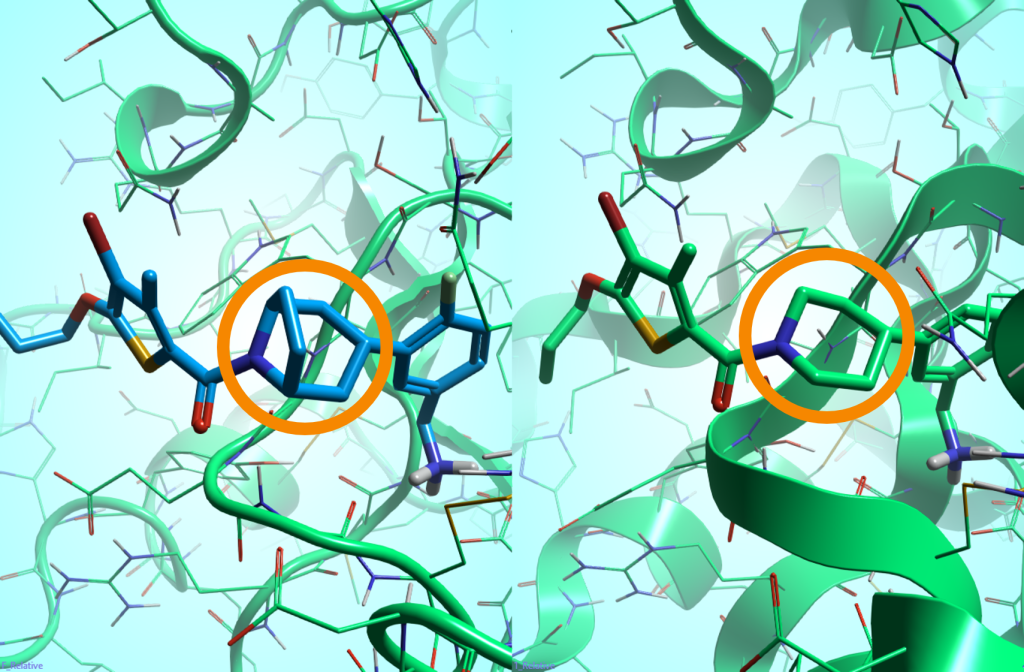
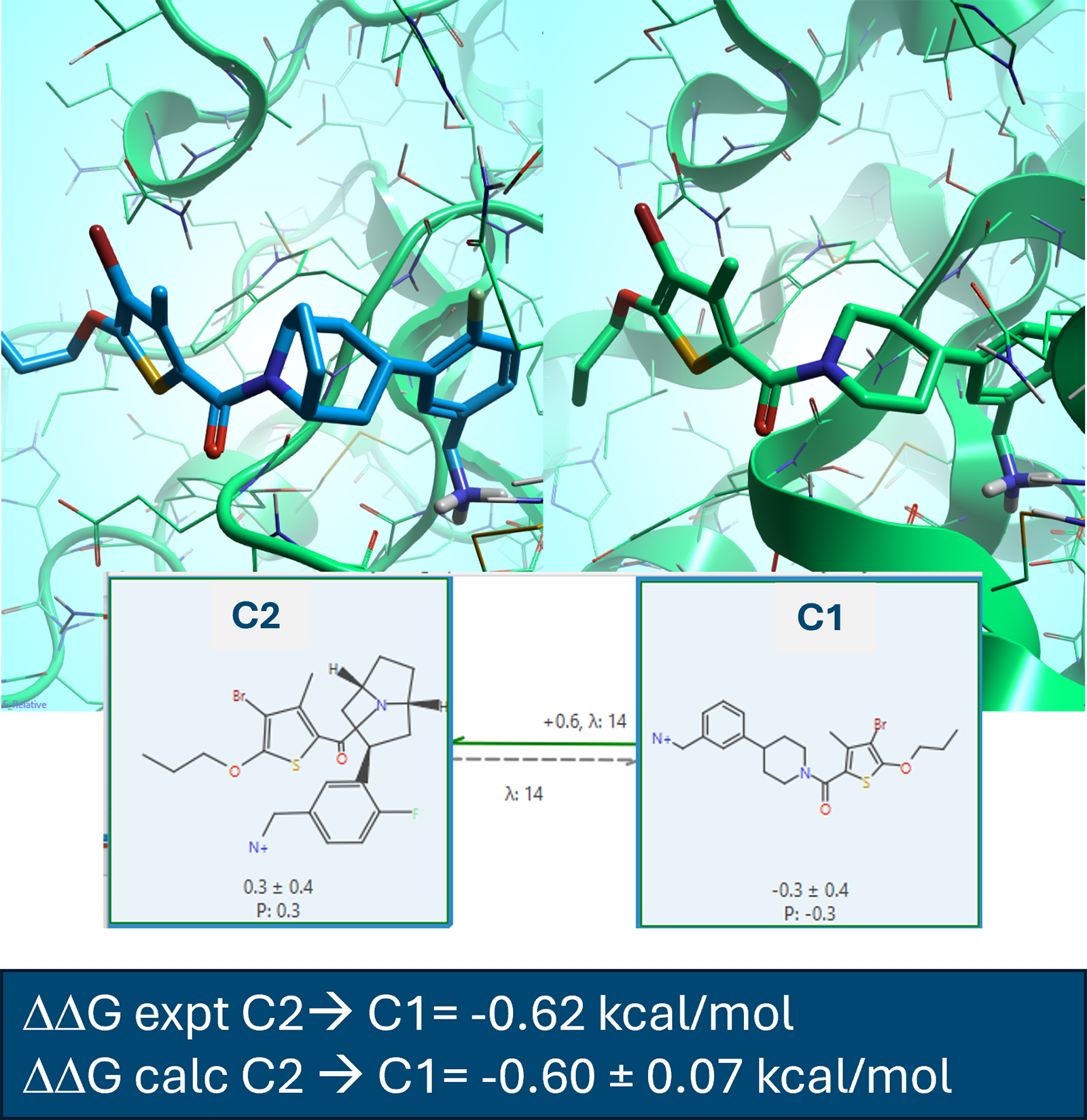
Flare V12 introduces support for ring-breaking transformations, enabling scaffold hopping, ring-size modifications, and interconversion between saturated and unsaturated rings as well as of cyclic structures and acyclic moieties. In other words, it enables the modeling of complex molecular changes in a single transformation pathway.
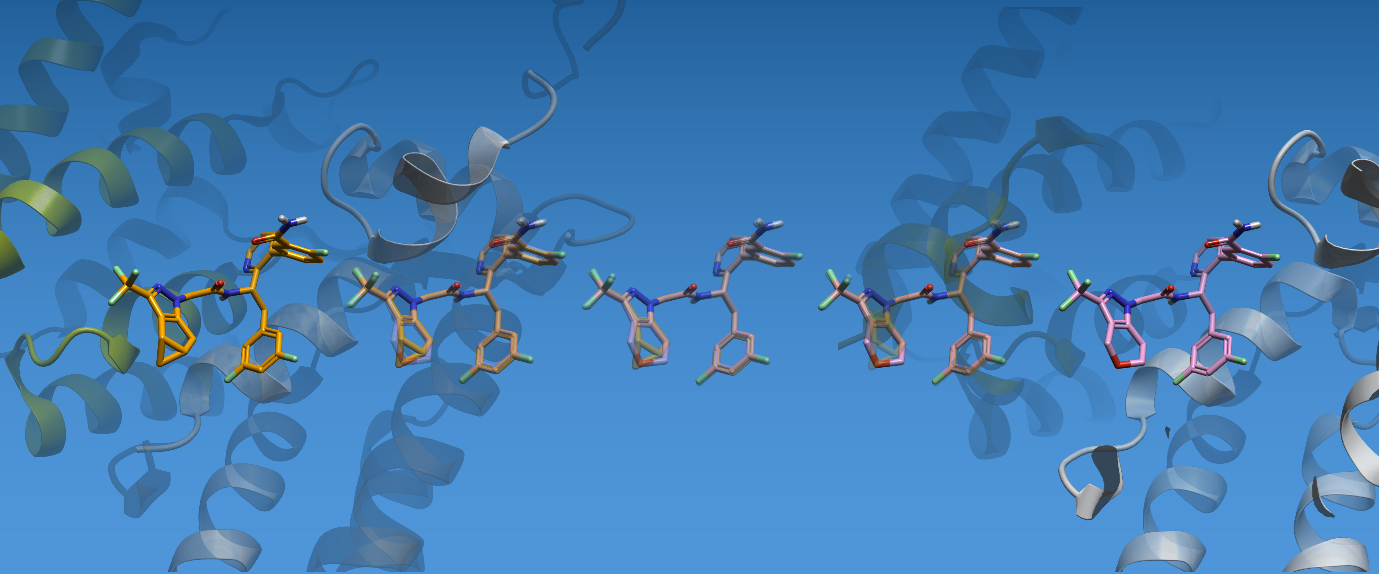
Ring modifications in Flare FEP are performed with the help of the Morse potential that allows the bonds that are alchemically modified to ‘break’ and their associated atoms to adopt separations that would otherwise lead to singularities in the lambda calculations. An example of a ring transformation is shown in the figure below:
Faster calculations with a new FEP engine and ‘two-system’ links
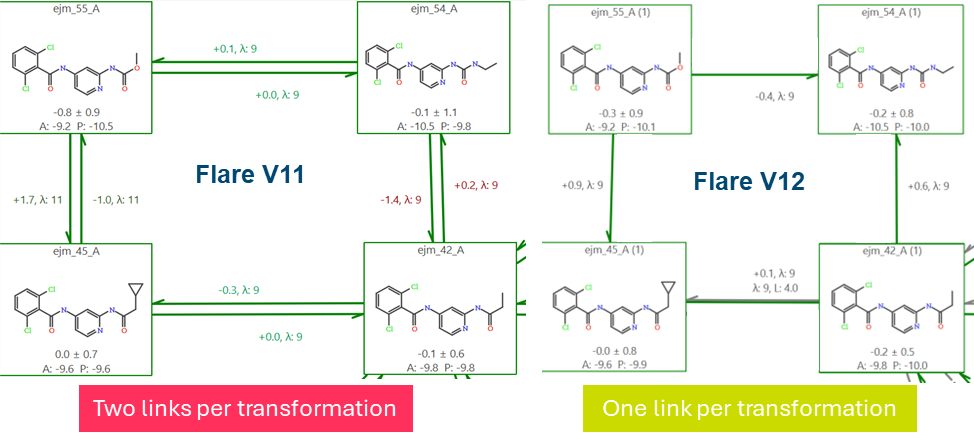
Flare V12 features a new FEP engine (SOMD2) for relative FEP, delivering significantly improved performance with approximately 20% faster calculations. The new engine is coupled with the new ‘two-system’ FEP links to deliver more than 2x faster calculations.
With ‘two-systems’ FEP links, simulations start from both end states of a transformation and progress towards neighboring λ windows, meeting in the middle of the alchemical pathway. To ensure adequate sampling and convergence across this pathway, replica exchange is used, allowing configurations to be exchanged between windows and improving overlap between states.
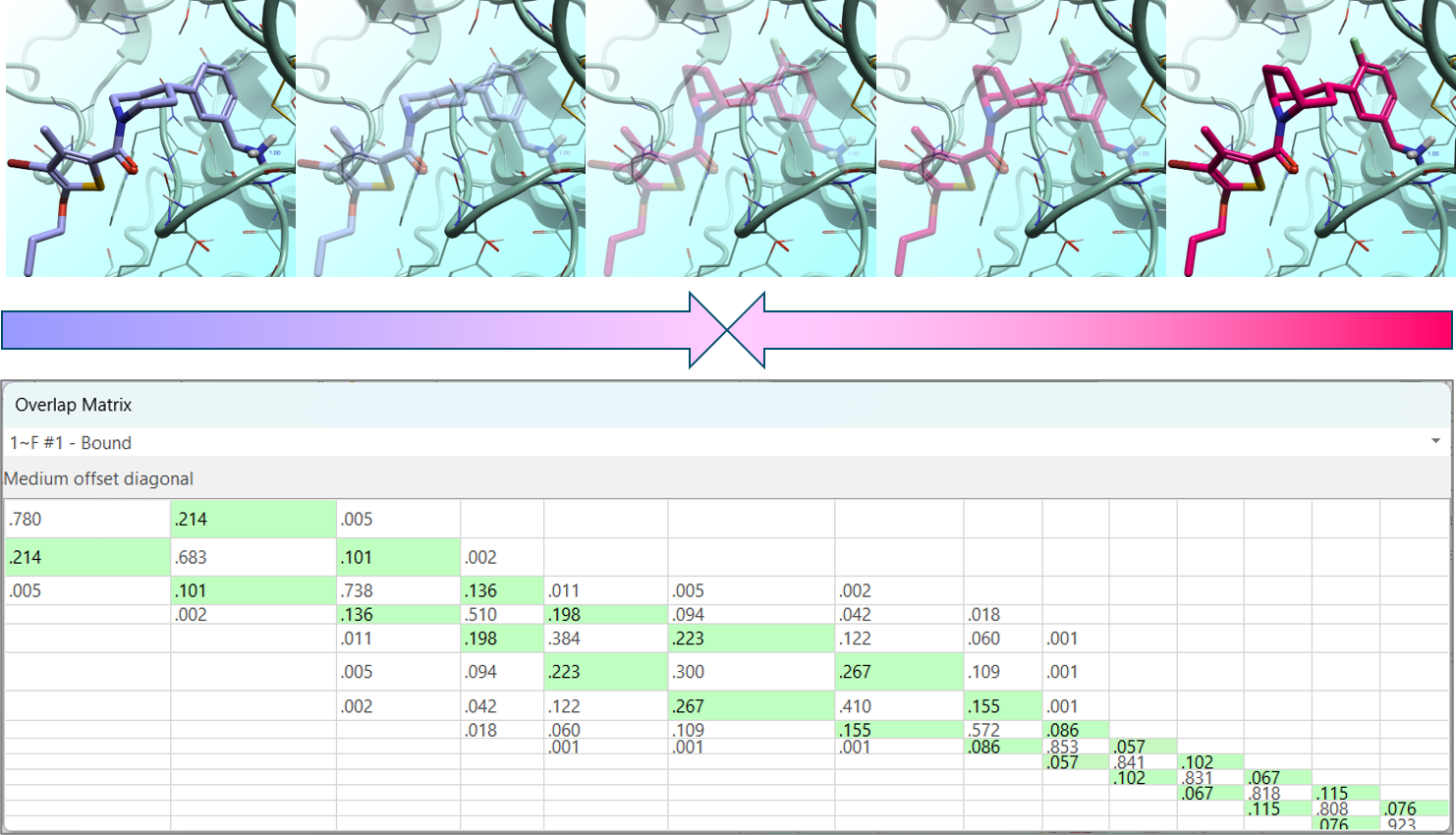
By combining the separate forward and reverse perturbations (molA → molB and molB → molA) required by the previous FEP engine into a single process, Flare V12 improves statistical efficiency while halving the time needed to complete a transformation.
For example, a single FEP transformation in the BACE protein takes around 8 hours to complete in Flare V11 on an entry level GPU (AWS g4dn.xlarge, NVIDIA T4; ~ 390 residues, default calculation options). Under comparable conditions, the same transformation in Flare V12 completes in approximately 3.8 hours.
Enabling GCMC water sampling can provide important gains in accuracy for systems where solvent effects are critical, at an additional computational cost typically around 20–25%.
Improved predictive accuracy with Replica Exchange and GCMC
Replica exchange when integrated into FEP workflows allows the system under study to explore a broader range of configurations, improving convergence and resulting in more reliable free energy estimates, particularly for flexible or challenging systems. Both Hamiltonian Replica Exchange [2] and Replica Exchange with Solute Tempering (REST2) [3] are now available in Flare V12.
Hamiltonian Replica Exchange works by attempting to ‘swap’ configurations within neighboring lambda windows, by assessing the potential energy of the system and with the use of a Metropolis acceptance criterion. As a result, conformations sampled in one λ window can propagate to others, improving overlap between neighboring states and enhancing the overall efficiency of free energy estimation.
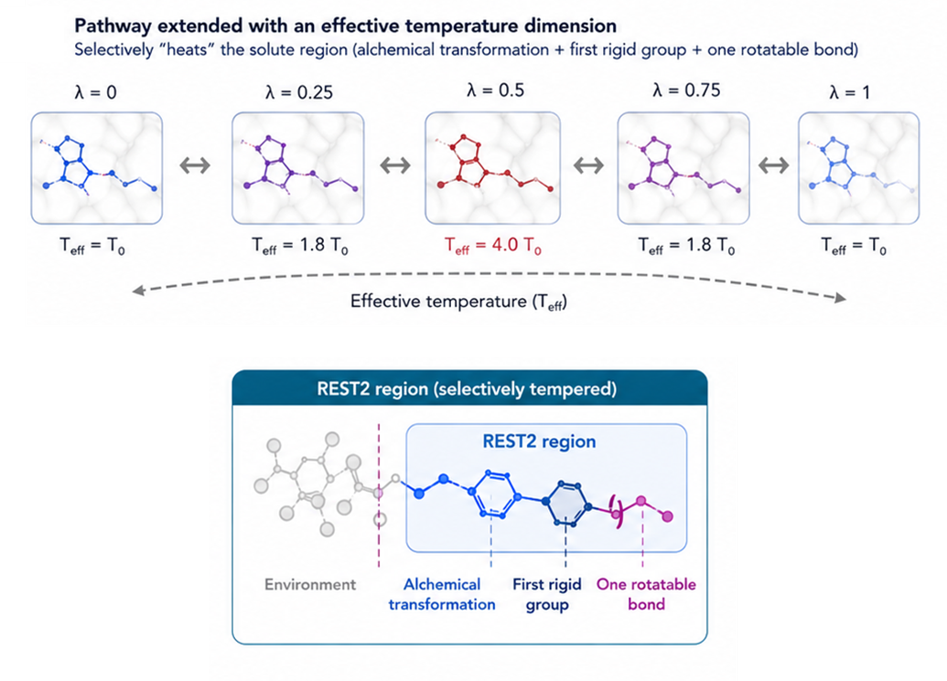
REST2 introduces a new dimension, the effective temperature. By increasing the temperature in the alchemical region of the molecule, more conformations are sampled and the system is allowed to adopt conformations that would otherwise would not be explored.
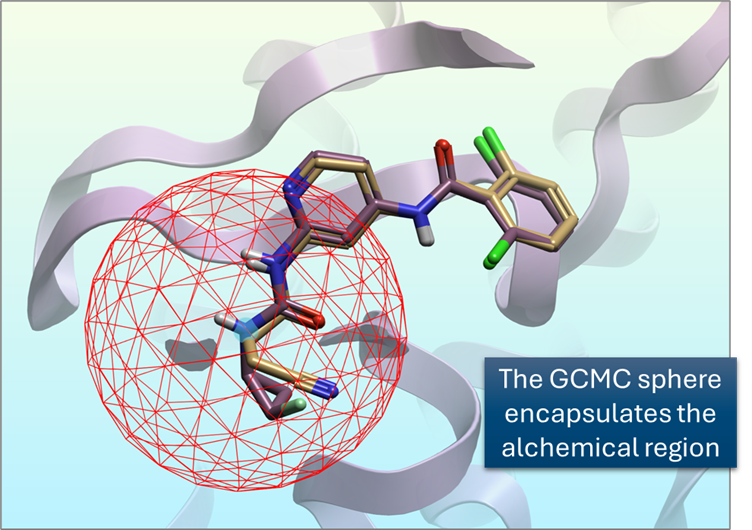
Enabling GCMC water sampling [4] in FEP calculations can provide important gains in accuracy for systems where solvent effects are critical, by enabling a more accurate representation of solvent behaviour. This method is particularly important in systems with buried binding sites not easily accessible by bulk water. GCMC, with the use of a Metropolis criterion, will attempt insertion of water molecules within the GCMC sphere, resulting in a more realistic representation of the solvent environment around the alchemical region. Also, in those cases where water displacement contributes to binding, the predictions with GCMC are more accurate.
Molecular Dynamics simulations for covalent ligands and non-natural residues
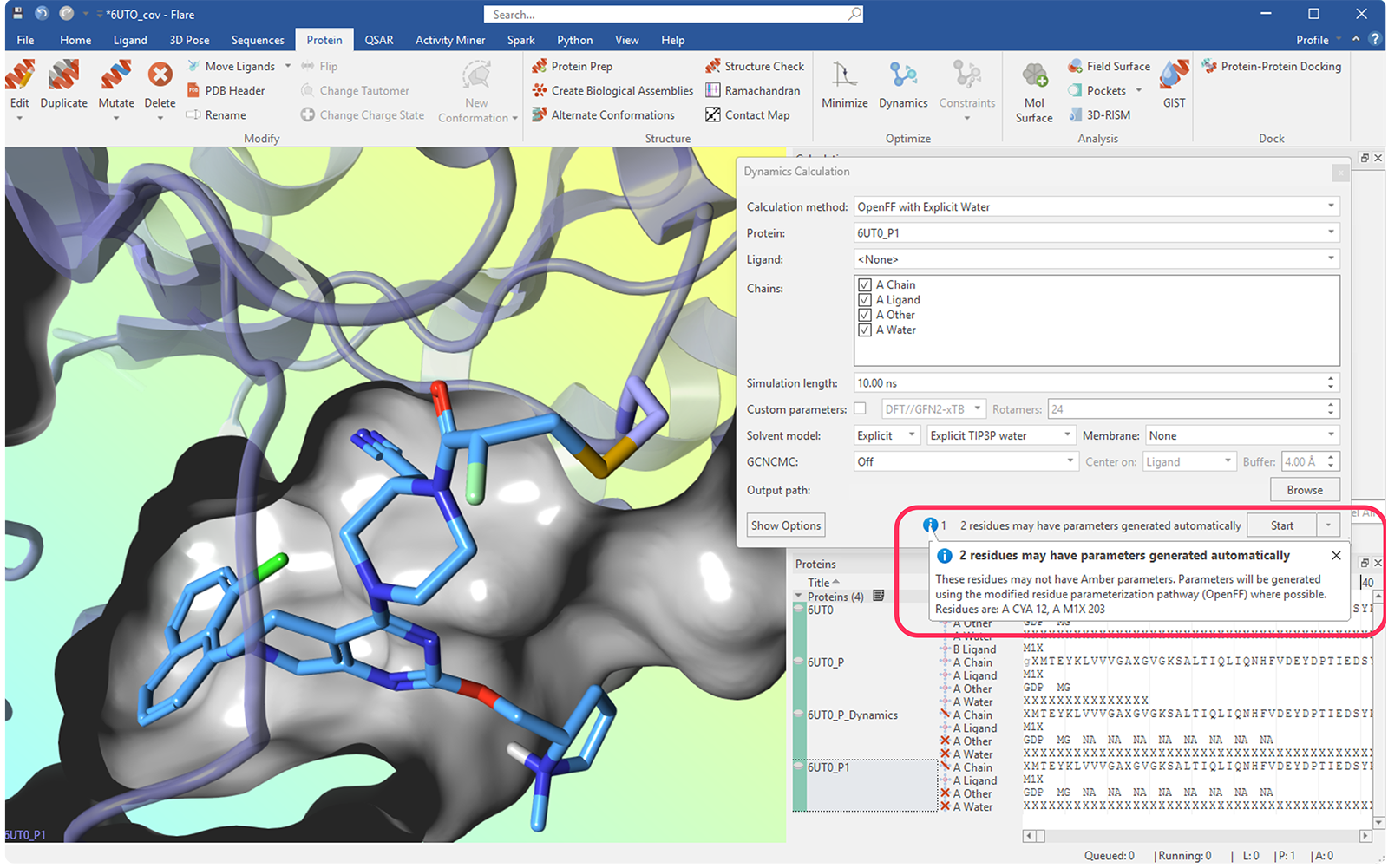
The applicability domain of Molecular Dynamics has been significantly expanded in Flare V12 to support simulations for covalent ligands and non-standard residues in peptide ligands and target proteins, including post-translational modifications.
Flare V12 introduces support for the parameterization of modified residues, enabling the treatment of proteins that include post-translational modifications (PTMs), non-standard amino acids and covalent ligands within standard workflows. This removes the need for manual parameter development in many cases and allows these systems to be incorporated more seamlessly into molecular mechanics simulations.
This is made possible by an automated workflow based on a methodology developed within the Open Force Field initiative for handling post-translational modifications [5]. In this approach, protein and small-molecule force field components are combined to ensure that modified residues remain fully compatible with their surrounding protein environment. Backbone terms shared with standard amino acids are derived from the AMBER FF14SB force field, while the remaining parameters are assigned using the OpenFF Sage force field. Atomic charges are generated using the AshGC charge model, providing a consistent description of the modified system.
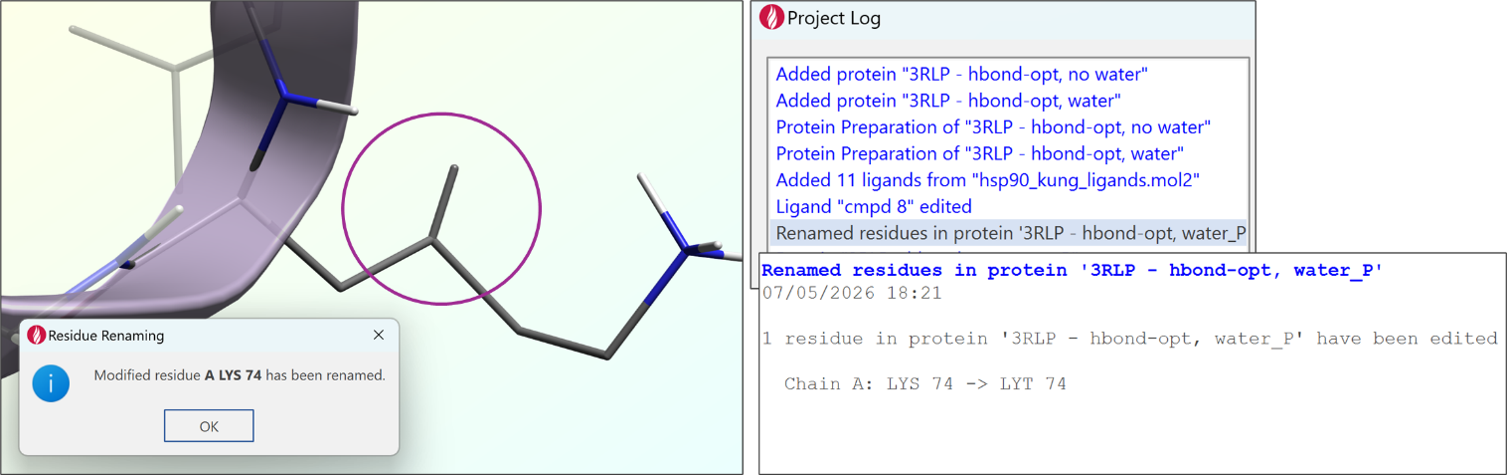
In addition to these modeling improvements, updates have been made to streamline Dynamics workflows. When a residue is modified using the Edit functionality, its name is now automatically updated upon exiting the editor. This avoids issues where modified residues retain the name of standard amino acids, which would otherwise lead to errors during Dynamics calculations. As a result, system preparation is more robust and requires less manual intervention.
Enhanced user experience for Detached calculations
The latest release of Flare introduces several improvements to the handling of detached calculations, providing greater flexibility and control over long-running jobs. Calculations can now be cancelled at any point, with any results generated up to that stage available for download and analysis directly within Flare. This makes it possible to monitor progress more effectively and to make earlier decisions without needing to wait for a calculation to fully complete.
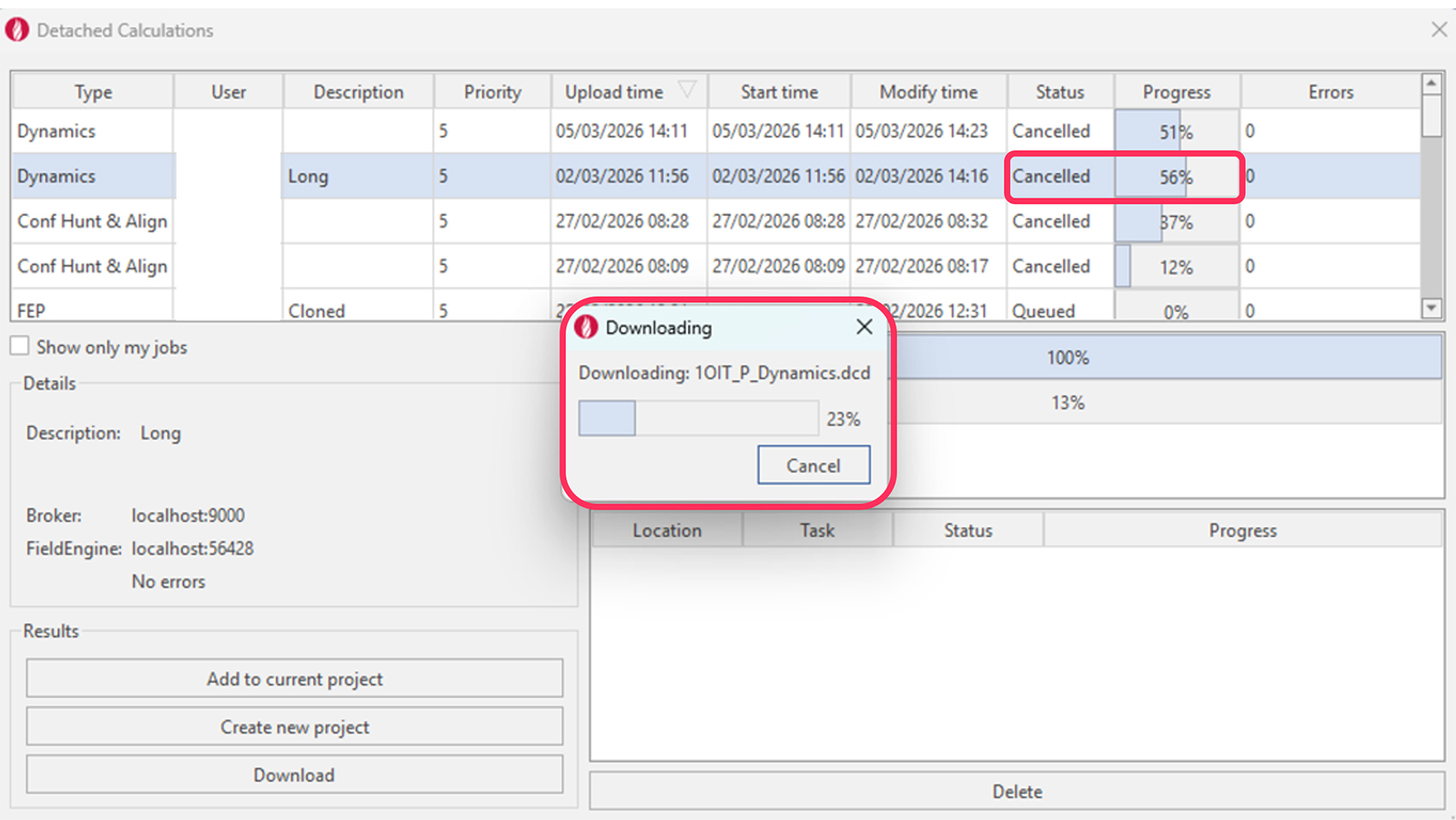
These enhancements are particularly valuable for computationally intensive workflows, such as long molecular dynamics simulations. For example, users can interrupt a Dynamics simulation to assess system stability, inspect intermediate trajectories, or verify that the system is behaving as expected. This reduces the risk of investing significant computational time in calculations that may require adjustment and supports a more iterative and responsive approach to simulation work.
Flare V12 also brings detached calculations for generative chemistry with MolGenAI, enhancing the usability of the method, as well as Dynamics and FEP with creation of custom parameters, enabling you can to run long calculations with the best possible parameters for your molecular system.
Accelerate your research with Flare V12
Flare V12 strengthens the role of FEP within the platform while broadening its applicability to more complex systems and transformations. These improvements are designed to help researchers generate reliable predictions more efficiently and to support decision-making across a wider range of drug discovery challenges.
Get in touch with us today to request an evaluation and gain access to Flare’s latest features. Our expert team will guide you through installation and setup, while our extensive library of tutorials, from essential workflows to advanced methods, ensures a smooth start. With Flare V12, you’ll be equipped to move faster, dig deeper, to design the molecules that matter most.
References
- J. Zou, Z. Li, S. Liu, C. Peng, D. Fang, X. Wan, Z. Lin, T-S. Lee, D. P. Raleigh, M. Yang, C. Simmerling, Scaffold hopping transformations using auxiliary restraints for calculating accurate relative binding free energies. Journal of Chemical Theory and Computation, 2021, 17, 6, 3710–3726
- L. Wang, B. J. Berne, and R. A. Friesner, On achieving high accuracy and reliability in the calculation of relative protein–ligand binding affinities. PNAS, 2012, 109, 1937–1942
- G. A. Ross, H. E. Bruce Macdonald, C. Cave-Ayland, A. I. Cabedo Martinez, and J. W. Essex, Replica-exchange and standard state binding free energies with grand canonical Monte Carlo. Journal of Chemical Theory and Computation, 2017, 13, 6373–6381
- P. Atkins, J. dePaula, J. Keeler, Atkins Physical Chemistry 11th Edition, Oxford University Press, 2018
- https://github.com/openforcefield/ptm_prototype/releases/tag/v0.0.1a1