Objective
Cresset Discovery Services, specialists in Free Energy Perturbation (FEP) methods, carried out an FEP study on a dataset of compounds with known experimental activity reported against Mpro of SARS-CoV-2.1-4 Using Flare™ FEP, Cresset’s reliable tool for binding affinity predictions,5 the study set out to elucidate the binding affinity of these compounds to Mpro and to identify the key interactions that contribute to potency.
Method
Relative free energies of binding (ΔΔG) were obtained using Flare FEP, by transformation of the ligand in its intermediate states for both the protein−ligand complex in water and the unbound ligand (small molecule force field: OpenFF 2.0.0, Protein force field: AMBER FF14SB, Charge method: AM1-BCC, Solvent: Explicit TIP3P water, Initial simulation length per λ window: 4ns).
Benchmark FEP
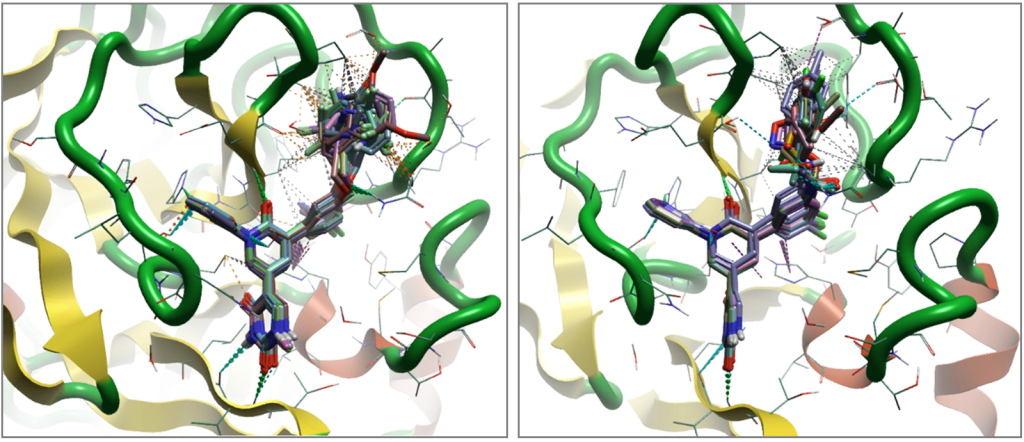
For this case study, a total of 36 analogues, with IC50 values reported against Mpro of SARS-CoV-2,1-4 were identified and selected to generate a dataset of compounds suitable for the FEP calculation. The 36 compounds were aligned to the co-crystallized ligand of PDB:7M8O.
Bioisosteric Replacement
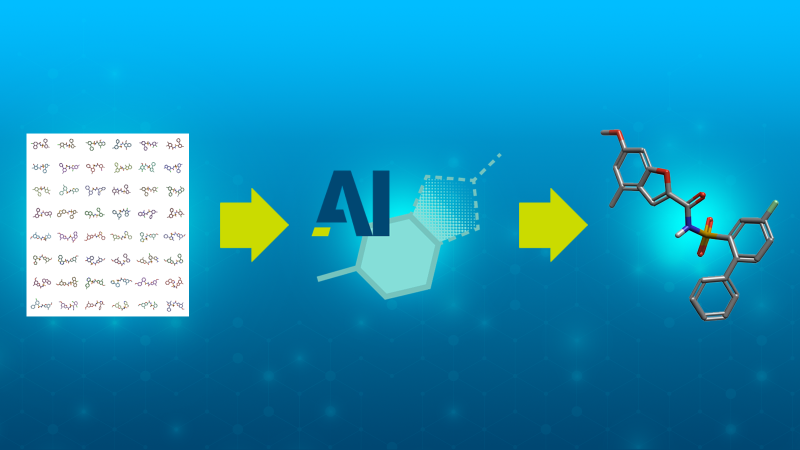
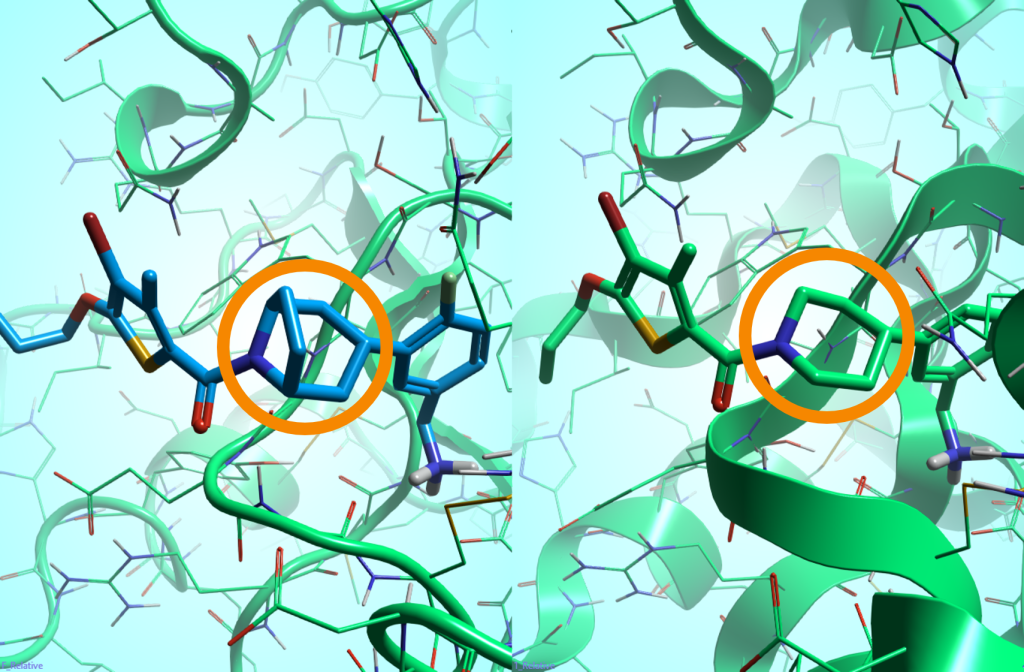
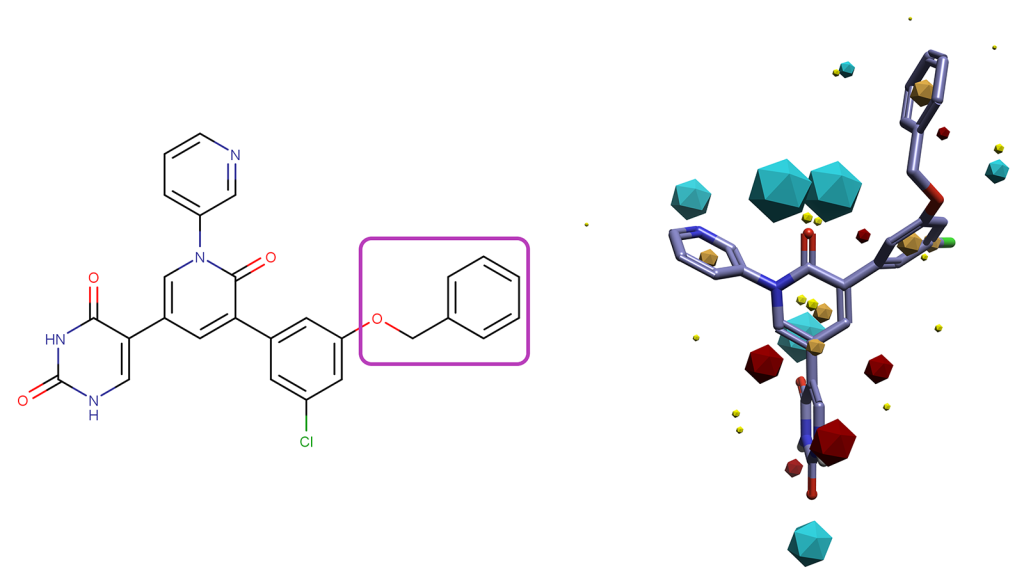
Cresset’s scientists applied de novo design expertise, in conjunction with analysis of the 3D electrostatic and shape properties to explore R-groups on a given scaffold and optimize bioisosteric replacement6. The results were prioritized based on 3D similarity scores and used to generate new designs for the FEP production run.
A reference compound with medium activity (IC50 = 128 nΜ) was used as a starting point for the exploration of de-novo compounds. Of a total of 500 compounds generated, 27 were selected for the FEP prediction run based on: formal charge=0, low 2D similarity, balanced calculated physicochemical properties, and meaningful chemical modifications.
Results
Production FEP
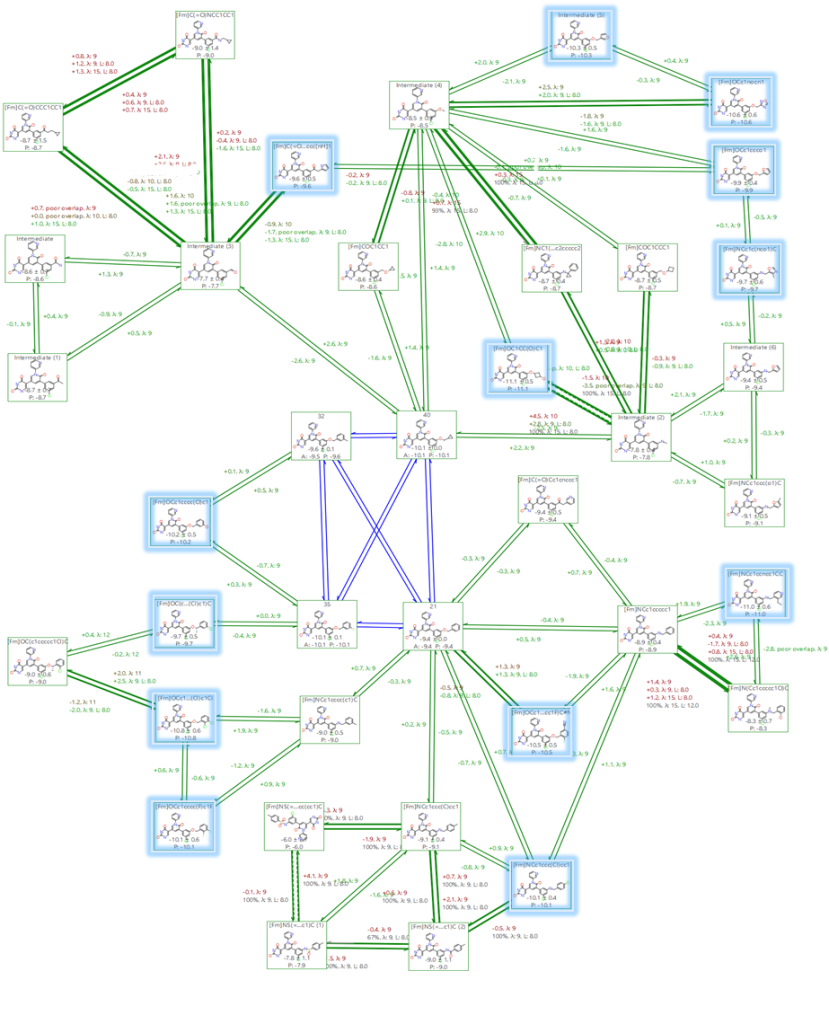
An FEP Production production run with the 27 new compounds, 4 intermediates and four compounds with known activity, was conducted. From the FEP production run, 13 compounds were predicted to be more active (10-fold more potent) than the starting point, and to have similar activity to the most active analogue of the entire dataset.
Conclusion
Cresset’s scientists accurately predicted the binding affinity of small molecules to Mpro and generated new designs with predicted high activity.
Cresset tools in synergy with their discovery scientists’ expertise and knowledge in free energy methods represent a promising approach for accelerating the discovery of new drugs. Find out more about how Cresset’s Discovery Services team can help to support, elucidate or completely manage your FEP project.
References
- Chun-Hui Zhang, et al., ACS Cent. Sci. 2021, 7, 3, 467–475 https://doi.org/10.1021/acscentsci.1c00039
- Chun-Hui Zhang, et al., ACS Med. Chem. Lett. 2021, 12, 1325−1332 https://doi.org/10.1021/acsmedchemlett.1c00326
- Maya G. Deshmukh, et al., Structure 29, 823–833, August 5, 2021 https://doi.org/10.1016/j.str.2021.06.002
- William L. Jorgensen, WO 2022/150584 A1
- Flare™, Cresset®, Litlington, Cambridgeshire, UK; https://www.cresset-group.com/flare/; Cheeseright T., Mackey M., Rose S., Vinter, A.; Molecular Field Extrema as Descriptors of Biological Activity: Definition and Validation J. Chem. Inf. Model. 2006, 46 (2), 665-676; Maximilian Kuhn, Stuart Firth-Clark, Paolo Tosco, Antonia S. J. S. Mey, Mark Mackey and Julien Michel Assessment of Binding Affinity via Alchemical Free-Energy Calculations J. Chem. Inf. Model. 2020, 60, 6, 3120–3130
- Spark™, Cresset®, Litlington, Cambridgeshire, UK; https://www.cresset-group.com/spark/; Cheeseright T., Mackey M., Rose S., Vinter, A.; Molecular Field Extrema as Descriptors of Biological Activity: Definition and Validation. J. Chem. Inf. Model. 2006, 46 (2), 665-676